Week 6 · Unit 3 · Yogas, Wealth, Longevity and Condition
Milestone 3 of 4: The yoga catalogue
Shapes in the Chart
Thirty-two Nābhasa yogas and a chapter of assorted others, read as a catalogue — with the organising logic explained so you never need to memorise it.
Assumes you have done: Units 1 and 2 of this week
Why this matters
Thirteen thousand words of named combinations, and the honest teaching is that you should read them once and then know where to find them. What makes that a competence rather than a shortcut is understanding the logic of each chapter: the Nābhasa yogas are geometric distribution patterns, which means you can recognise one on sight without knowing its name, and Chapter 38 is heterogeneous, which means its combinations do not deserve the same authority as Chapter 36's framework.
Learn
Thirteen thousand words in two chapters, and the honest instruction is to read them once at pace and then use them as a lookup.
That is not a shortcut, and it is worth explaining why before you do it.
What a Nābhasa yoga is
Every yoga you have met so far depends on which planets are involved. A Rāja Yoga is a relationship between particular lords. A Yoga Kāraka is a particular planet for a particular ascendant.
Chapter 37’s yogas are not like that. They depend on how the seven grahas are distributed — how many signs they occupy, and in what geometric arrangement.
All seven in one sign. Spread across exactly two. Across three. Occupying only the Kendras. Occupying only movable signs. Arranged in an unbroken run.
The planets’ identities barely enter. What matters is the shape.
That makes them the only class of yoga you can identify by looking at a chart rather than by calculating, and it is genuinely useful. Open any chart and the distribution is the first thing your eye registers: clustered or spread, contiguous or scattered. Chapter 37 is the catalogue of names for what you already noticed.
Reading it properly, once
Read Chapter 37 through. Not to retain it — to see its shape.
You will notice the yogas fall into families. Some are about the number of signs occupied. Some are about occupation of particular kinds of house — all the Kendras, all the Paṇapharas, all the Āpoklimas. Some are about sign quality — all movable, all fixed, all dual. Some are about contiguity — an unbroken run of occupied signs.
Once you have the families, the chapter becomes navigable rather than long. You look at a chart, describe the distribution in a sentence, and go to the family that matches.
Chapter 38, and a caution about authority
Chapter 38 is titled “Many Other Yogas” and it is exactly that: a collection. Some entries are widely used — Gajakesari, Jupiter in a Kendra from the Moon, is named here and is one of the most frequently cited yogas in modern practice. Others are minor and appear nowhere else.
The caution is about promotion. It is easy, having found a combination in BPHS, to give it the weight of BPHS’s doctrine. But a chapter of assorted collected combinations is a different kind of material from a chapter that develops a principle across forty-six verses, as Chapter 36 does.
The step the catalogue never supplies
Every entry in these two chapters states a result. This arrangement makes the native wealthy. This one makes him a king. This one brings misfortune.
Not one of them tells you whether the planets forming the pattern are in any condition to produce it.
That is not an omission — it is the division of labour in the book. Chapter 37 tells you a pattern is present. Chapters 3, 29 and 36 tell you whether the planets involved have dignity, strength and favourable function. You supply the join.
So the sequence, every time:
- Notice the shape.
- Find the name in the catalogue.
- Read the claim.
- Apply the delivery test — dignity, strength, functional nature, placement.
A named yoga whose planets are debilitated and sitting in Duḥsthānas is genuinely present and will produce very little. Note the phrasing: it is not cancelled and it is not false. It is formed and unable to deliver, which is a more precise statement than either alternative and is exactly the kind of thing you should be able to say by the end of this week.
One unit left, and it is the one people arrive most excited about.
Read BPHS
This is the source itself. The teaching above prepares you for it; it does not replace it.
Show the full passage — 43 verses
अधुना नाभसा योगाः कथ्यन्ते द्विजसत्तम! ।
द्वात्रिंशत् तत्प्रभेदास्तु शतघ्नाष्टादशोन्मिता ॥ १ ॥
आश्रयाख्यास्त्रयो योगा दलसंज्ञं द्वयं ततः ।
आकृतिर्विशतिः संख्याः सप्त योगाः प्रकीर्तिताः ॥ २ ॥
1-2. O excellent of the Brahmins, now are narrated the 32 Nabhasa Yogas. These have 1800 different varieties. Of these 3 are spoken as Ashraya yogas, 2 Dala yogas,20 Akriti yogas and 7 sankhya yogas.
रज्जुश्च मुसलश्चैव नलश्चेत्याश्रयास्त्रयः ।
मालाख्याः सर्पसंज्ञश्च दलयोगौ प्रकीर्तितौ ॥ ३ ॥
गदाख्या: शकटाख्याश्च श्रृङ्गाटक-विहंगमौ ।
हलवज्रयवाश्चैव कमलं वापियूपकौ ॥ ४ ॥
शर-शक्ति-दण्ड-नौका-कूट-च्छत्र-धनूंषि च ।
अर्धचन्द्रस्तु चक्रं च समुद्रश्चेति विंशतिः ॥ ५ ॥
संख्याख्या - बल्लकी - दाम - पाश - केदार - शूलकाः ।
युगो गोलश्च सप्तैते युक्ता दन्तमिता द्विज ! ॥ ६ ॥
3-6. NAMES OF NABHASA YOGAS : Rajju, Musala, and Nala, these 3 are Ashraya yogas. Maala and Sarpa yogas have been spoken of as Dala yogas. The 20 Akriti yogas are Gada, Shakata, Shringataka, Pakshi, Hala, Vajra, Yava, Kamala, Vapi, Yupa, Shara, Shakti, Danda, Nauka, Koota, Chhatra, Dhanushi, Ardha chandra, Chakra and Samudra yogas. O Brahmin, the 7 sankhya yogas are Vallaki, Daama, Pasha, Kedara, Shoola, Youga and Gola yogas. The total number of these yogas is 32.
सर्वैश्वरे स्थितै रज्जुः स्थिरस्थैर्मुसलः स्मृतः ।
नलाख्यों द्विस्वभावस्थैराश्रयाख्या इमे स्मृताः ॥ ७ ॥
- RAJJU, MUSALA AND NALA YOGAS: If all the planets are situated in movable signs they cause Rajju Yoga, if they are in fixed signs they cause Musala Yoga and if they are in dual signs they cause Nala yoga. These three yogas have got a combined or joint name of Ashraya yoga.
केन्द्रत्रयगतैः सौम्यैः पापैर्वा दलसंज्ञकौ ।
क्रमान्मालाभुजंगाख्यौ शुभाशुभफलप्रदौ ॥ ८ ॥
- MAALA AND SARPA YOGAS: If 3 angles are occupied by benefics or by malefics the two yogas have the combined name of Dala Yoga. These two yogas are respectively Maala Yoga and Sarpa Yoga and these yogas respectively produce auspicious and in auspicious results.
आसन्नकेन्द्रद्वयगैः सवैर्योगो गदाह्वयः ।
शकटं लग्नजायास्यैः खाम्बुगैर्विहगः स्मृतः ॥ ९ ॥
योगः श्रृङ्गाटकं नाम लग्नात्मजतपः स्थितैः ।
अन्यस्थानात् त्रिकोणस्थैः सर्वैर्योगो हलाभिधः ॥ १० ॥
लग्नजायास्थितैः सौम्यैः पापाख्यैः खाऽम्बुसंस्थितैः ।
योगो वज्राभिध: प्रोक्तः विपरीतस्थितैर्यवः ॥ ११ ॥
9-11. GADA SHAKATA, VIHAGA, SRINGATAKA, HALA, VAJRA AND YAVA YOGAS: If all the planets occupy two successive angles, the yoga so formed is called Gada Yoga; Shakata Yoga if they all occupy the Ascendant and the 7th House; Vihaga Yoga is understood if they are in the 4th and the 10th Houses; the Yoga named as Sringataka is formed if from the Ascendant, the trines have all the planets in them; the Yoga named as Hala is formed if they are in the trines from any other House. If the benefics are situated in the Ascendant and the 7th House or the malefics are situated in the 4th or the 10th Houses the Yoga so formed has been called by the name of Vajra and if the situation is the reverse of the above one then is formed the Yoga called Yava.
सर्वकेन्द्रगतैः सर्वैर्मिश्रैः कमलसंज्ञकः ।
केन्द्रादन्यत्रगैः सर्वैंर्योगो वापीसमाह्वयः ॥ १२ ॥
- KAMAL AND VAAPI YOGAS: When all the planets happen to fall in all the angles together, the Yoga of the name of Kamala is formed and if all are in other houses from the angles, the yoga that is formed so is named as Vapi Yoga.
यूपो लग्नाच्चतुर्भस्यैः शरस्तुर्याच्चतुर्भगैः ।
शक्तिर्मदाच्चतुर्भस्थैर्दण्डो मध्याच्चतुर्भगैः ॥ १३ ॥
- YUPA, SARA, SAKTHI AND DANDA YOGAS: When all the planets are in the 4 Houses from the Ascendant, the yoga that is formed thus is called Yupa, when they are in the 4 Houses from the 4th House, Sara yoga is formed, when they are in 4 Houses from the 7th House the Yoga so formed is Sakthi and when all the planets are in four houses from the 10th House, the Yoga so formed is known as Danda yoga.
लग्नात् सप्तमगैर्नौका कूटस्तुर्याच्च सप्तमैः ।
छत्राख्यः सप्तमादेवं चापं मध्याद् भसप्तगैः ॥ १४ ॥
- NAUKA, KOOTA, CHHATRA, AND CHAAPA YOGAS : If all the planets are placed in the 7 Houses from the Ascendant it forms the Nauka Yoga. The Yogas Koota, Chhatra and Chaapa are formed if all the planets are situated respectively in the 7 Houses from the 4th, 7th and 10th Houses.
लग्नादेकान्तरस्यैश्च षड्भगैश्चक्रमुच्यते ।
धनादेकान्तरस्यैस्तु समुद्रः षड्गृहाश्रितै ॥ १५ ॥
- CHAKRA AND SAMUDRA YOGAS: If all the planets occupy six alternative signs commencing from the Ascendant, Chakra Yoga is formed, and similarly if they occupy six alternative signs commencing from the 2nd House; it forms the Samudra Yoga.
एकराशिस्थतैर्गोलो युगाख्यो द्विभसंस्थितैः ।
शूलस्तु त्रिभगैः प्रोक्तः केदारस्तु चतुर्भगैः ॥ १६ ॥
पञ्चराशिस्थतैः पाशो दामाख्यः षड्गृहाश्रितैः ।
वीणा सप्तभगैः सर्वैर्विहायान्यानुदीरितान् ॥ १७ ॥
16-17 SANKHYA YOGAS: If all the planets are situated in one sign Gola Yoga is formed, if in 2 sign yuga Yoga, if in 3 signs Shoola Yoga, if in 4 signs kedar yoga, if in 5 signs Pasha Yoga, if in 6 signs Dama Yoga and if in7 signs Veena Yoga is formed. These Yogas will be operable only if none of the Nabhasa Yogas explained above are derivable.
अटनप्रियाः सुरुपा: परदेशस्वास्थ्यभागिनो मनुजाः ।
क्रूरा: खलस्वभावा रज्जुप्रभवाः सदा कथिताः ॥ १८ ॥
- EFFECTS OF NABHASA YOGAS: RAJJU YOGA: The native born in this yoga will be fond of wandering, will be charming, will remain in good health and fortunate in foreign countries and will be of cruel and wicked disposition.
मानज्ञानधनाद्यैर्युक्ता भूपप्रियाः ख्याताः ।
बहुपुत्राः स्थिरचित्ता मुसलसमुत्था भवन्ति नराः ॥ १९ ॥
- MUSALA YOGA: Natives having Musala yoga in their horoscope are endowed with honour, wisdom and knowledge, wealth etc, will be dear to the king, famous, will have many sons and be firm in disposition.
न्यूनातिरिक्तदेहा धनसञ्चयभागिनोऽतिनिपुणाश्च ।
बन्धुहिताश्च सुरूपा नलयोगे सम्प्रसूयन्ते ॥ २० ॥
- NALA YOGA: The natives born in Nala yoga will be invalid or malformed or will have superfluous limbs, will be interested in the accumulation of money, be very skilful, be helpful to relatives and be charming.
नित्यं सुखप्रधाना वाहनवस्त्रान भोगसम्पन्ना ।
कान्ताः सुबहुस्त्रीका मालायां सम्प्रसूताः स्युः ॥ २१ ॥
- MAALA YOGA: The natives born in the Maala yoga will be always happy, be endowed with conveyances, robes, food and pleasures, splendour and many charming females.
विषमाःक्रूरा निःस्वा नित्यं दुःखार्दिताः सुदीनाश्च ।
परभक्षपाननिरताः सर्पप्रभवा भवन्ति नराः ॥ २२ ॥
- SARPA YOGA: The natives born in the Sarpa yoga will be crooked, cruel, poor, will always remain miserable and will always depend on others food and drinks.
सततोद्युक्तार्थवशा यज्वानः शास्त्रगेयकुशलश्च ।
धनकनकरत्नसम्पत्संयुक्ता मानवा गदायां तु ॥ २३ ॥
- GADA YOGA: The natives having Gada yoga in their horoscopes will always remain engaged in earning wealth, will perform sacrificial rites, will be skilful in Sastras and will have knowledge and will be endowed with wealth, gold and precious stones.
रोगार्ता: कुनखा मूर्खा: शकटानुजीविनो निःस्वा ।
मित्रस्वजनविहीना: शकटे जाता भवन्ति नराः ॥ २४ ॥
- SHAKATA YOGA: The persons born in Shakata yoga will always remain afflicted by diseases, will have diseased or ugly nails, will be foolish, will earn their living by pulling carts, be poor, be devoid of friends and relatives.
भ्रमणरुचयोविकृष्टा दूलाः सुरतानुजीवनो धृष्टाः ।
कलहप्रियाच नित्यं विहगे योगे सदा जाताः ॥ २५ ॥
- VIHAGA YOGA: The person born in the Vihaga yoga will be fond of roaming, be subject to others, messengers, will earn his living by sexual dealings, be shameless and given to quarrels.
प्रियकलहाः समरसहाः सुखिनो नृपतेः प्रियाः शुभकलत्राः ।
आढया युवतिद्वेष्याः श्रृङ्गाटकसम्भवा मनुजाः ॥ २६ ॥
- SHRINGATAKA YOGA: The person born in shringataka yoga will be fond of quarrels and battles, be happy, dear to the king, endowed with an auspicious wife and be a hater of women.
बह्वाशिनो दरिद्राः कृषीवला दुःखिताश्च सोद्वेगा ।
बन्धुसुहृदिभः त्यक्ताः प्रेष्याः हलसंज्ञके सदा पुरुषाः ॥ २७ ॥
- HALA YOGA: The person born in the yoga named as Hala will be gluttonous, penurious, be a farmer, be miserable, excited, will give up friends and relatives and will have the soul or a servant.
आद्यन्तवयः सुखिनः शूराः सुभगा निरीहाश्च ।
भाग्यविहीना वज्रे जाता: खला विरुद्ध ॥ २८ ॥
- VAJRA YOGA: The person born in the Vajra Yoga will be happy in the beginning and the end of his life, be valorous, charming, devoid of desires and fortunes, be villainious and inimical to the people.
व्रतनियममङ्गलपरा वयसो मध्ये सुखार्थपुत्रयुताः ।
दातारः स्थिरचित्ता यवयोगभवाः सदा पुरुषाः ॥ २९ ॥
- YAVA YOGA: The person born in this yoga will sincerely observe fasts and other religiou rites, will do auspicious acts, happy in mid life, will be endowed with wealth and sons, be charitable and have firmness of mind.
विभवगुणाढयाः पुरुषः स्थिरायुषो विपुलकीर्तयः शुद्धाः ।
शुभशतका: पृथ्वीशाः कमलभवाः मानवा नित्यम् ॥ ३० ॥
- KAMALA YOGA: The person born in the kamala yoga is endowed with grandeur and is virtuous, be longlived, very famous, pure, will perform hundreds of auspicious deeds and be a king.
निधिकरणे निपुणधियः स्थिरार्थसुखसंयुताः सुतयुताश्च ।
नयनसुखसम्प्रदृष्टा वापीयोगेन राजानः ॥ ३१ ॥
- VAPI YOGA: The person born in the Vapi Yoga will be skilful in accumulating wealth, will be endowed with enduring wealth and happiness and sons, be free from eye afflictions and be a king.
आत्मविदिज्यानिरतः स्त्रिया युतः सत्वसम्पन्नः ।
व्रतनियमरतमनुष्यो यूपे जातो विशिष्ट ॥ ३२ ॥
- YUPA YOGA: The person born in this yoga will have spiritual knowledge, will be interested in doing sacrifical rites (yajnas), endowed with wife and valour, interested in keeping fasts and other religious observations and be distinguished.
इषुकारा बन्धनपाः मृगयाधनसेविताश्च मांसादा ।
हिंस्रा: कुशिल्पकाराः शरयोगे मानवाः प्रसूयन्तेः ॥ ३३ ॥
- SHARA YOGA: The person born in SHARA YOGA will be maker of arrows, be head of prison, will earn money through hunting animals, be non-vegetarian, violent and maker of mean handiworks.
धनरहितविफलदुःखितनी चालसाश्चिरायुषः पुरुषाः ।
संग्रामबुद्धिनिपुणाः शक्त्यां जाता: स्थिरा: शुभगाः ॥ ३४ ॥
- SHAKTI YOGA: The person born in the shakti yoga will be bereft of wealth, be unsuccessful, miserable, mean, lazy, longlived, interested and skilful in war, firm and auspicious.
हतपुत्रदारनि:स्वाः सर्वत्र च निर्धृणाः स्वजनबाह्याः ।
दुःखितनीचप्रेष्या दण्डप्रभवा भवन्ति नराः ॥ ३५ ॥
- DANDA YOGA: The person born in Danda Yoga will be devoid of wife, sons, and wealth, be thoroughly cruel, be rejected by his relatives, be miserable, and will serve mean people.
सलिलोपजीविभवा बह्वाशा: ख्यातकीर्तयो दुष्टाः ।
कृपणा मलिना लुब्धा नौसञ्जाताः खलाः पुरुषाः ॥ ३६ ॥
- NAUKA YOGA: The person born in Nauka Yoga will earn his livelihood through creatures born in water, will be wealthy, will have great expectations, will be very famous but very wicked, miserly, dirty and avaricious.
अनृतकथनबन्धनपा निष्किञ्चनाः शठा: क्रूराः ।
कूटसमुत्था नित्यं भवन्ति गिरिदुर्गवासिनो मनुजाः ॥ ३७ ॥
- KOOTA YOGA: This person born in koota yoga will be a liar, be head of prison, bereft of wealth, crafty, cruel and will live in hills and fortresses.
स्वजनाश्रयो दयावान्नानानृपवल्लभः प्रकृष्टमतिः ।
प्रथमेऽन्त्ये वयसि नराः सुखवान् दीर्घायुरातपत्री स्यात् ॥ ३८ ॥
- CHHATRA YOGA: The person born in the chhatra yoga will help the people of his family, be kind, respected by many kings, will have excellent intelligence, be happy in the beginning and the end of his life and longlived.
आनृतिकगुप्तपालाश्चोराः कितवाश्च कानने निरताः ।
कार्मुकयोगे जाता भाग्यविहीना: शुभा वयोमध्ये ॥ ३९ ॥
- CHAAPA YOGA: The person born in chaapa yoga will be a liar, head of prison (Jailer), thief, crafty, will wander in forests, be devoid of fortune and will be happy in the middle part of his life.
सेनापतयः सर्वे कान्तशरीरा नृपप्रिया बलिनः ।
मणिकनकभूषणयुता भवन्ति योगेऽर्धचन्द्राख्ये ॥ ४० ॥
- ARDHA CHANDRA YOGA: The person born in Ardha chandra yoga will be general of an army, will have splendorous body, be favourite of the king, be strong and be endowed with gems, gold and ornaments.
प्रणताऽऽशेषनराधिप किरीटरत्नप्रभा स्फुरितपादः ।
भवति नरेन्द्रो मनुजश्चक्रे यो जायते योगे ॥ ४१ ॥
- CHAKRA YOGA: The person born in CHAKRA YOGA will be an emperor who will bear on his head a crown studded with bright gems and at whose feet many kings will place their heads.
बहुरत्नधनसमृद्धा भोगयुता धनजनप्रियाः ससुता ।
उदधिसमुत्थाः पुरुषाः स्थिरविभवाः साधुशीला ॥ ४२ ॥
- SAMUDRA YOGA: The person born in the samudra yoga will be endowed with many precious stones and much wealth, will have pleasures, be dear to the people, will have sons, and firm wealth and be well disposed.
प्रियगीतनृत्यवाद्या निपुणा: सुखिनश्च धनवन्तः ।
नेतारो बहुभृत्या वीणायां कीर्तिताः पुरुषाः ॥ ४३ ॥
- VEENA YOGA:The person born in Veena yoga will be a lover of songs, dance and musical instrument, be skilful, happy. wealthy and leader and will have many servants.
दाम्नि सुजनोपकारी नयधनयुक्तो महेश्वरः ख्यातः ।
बहुसुतरत्नसमृद्धो धीरो जायते विद्वांश्च ॥ ४४ ॥
- DAAMINI YOGA: The person born in Daamini Yoga will be thoroughly gentle, helpful to others, will have righteously earned wealth, be very affluent, famous, endowed with many sons and gems, will have fortitude and be learned.
पाशे बन्धनभाज: कार्ये दक्षा: प्रपञ्चकाराश्च ।
बहुभाषिणो विशीला बहुभृत्याः सम्प्रताना ॥ ४५ ॥
- PAASHA YOGA: The person born in Paasha Yoga will be liable to be imprisoned, be skilful in work, be deceiving in disposition, be very talkative, be devoid of virtues and good manners and will have many servants and a great family.
सुबहूनामुपयोज्याः कृषीवला: सत्यवादिनः सुखिनः ।
केदारे सम्भूताश्चलस्वभावा धनैर्युक्ताः ॥ ४६ ॥
- KEDARA YOGA: The person born in Kedara yoga will be a benefactor to many, will do agricultural work, be truthful, happy. fickleminded and wealthy.
तीक्ष्णालसधनहीना हिंस्राः सुबहिष्कृता महाशूराः ।
संग्रामे लब्धयशा शूले योगे भवन्ति नराः ॥ ४७ ॥
- SHOOLA YOGA: The person born in the Shoola Yoga will be sharp, lazy, devoid of wealth, violent, rejected and scorned by the people, very strong and gets great fame through war.
पाखण्डवादिनो वा धनरहिता वा बहिष्कृता लोके ।
सुतमातृधर्मरहिता युगयोगे ने नरा जाताः ॥ ४८ ॥
- YUGA YOGA: The person born in Yuga Yoga will be hypocrite, be devoid of wealth, be banished by society and be devoid of sons, mother and wealth.
बलसंयुक्ता विधना विद्याविज्ञानवर्जिता मलिनाः ।
नित्यं दुःखितदीना गोले गोले योगे भवन्ति नराः ॥ ४९ ॥
- GOLA YOGA : The person born in the Gola Yoga will be strong, be devoid of wealth, learning and intelligence, be dirty, be always sorrowful and miserable.
सर्वास्वपि दशास्वेते भवेयुः फलदायिनः ।
प्राणिनामिति विज्ञेयाः प्रवदन्ति तवाग्रजाः ॥ ५०॥
- It should be known that the effects due to the above said Nabhasa Yogas will be felt in all the Dasa periods of the planets throughout life.
Show the full passage — 22 verses, 2 diagrams
लग्ने शुभयुते योगः शुभ: पापयुतेऽशुभः ।
व्ययस्वगैः शुभैः पापैः क्रमाद्योगौ शुभाऽशुभौ ॥ १ ॥
शुभयोगोद्भवोः वाग्मी रुपशीलगुणान्वितः ।
पापयोगोद्भवः कामी पापकर्मा परार्थयुक् ॥ २ ॥
1-2. BENEFIC AND MALEFIC YOGAS: If there is only a benefic planet in the Ascendant the yoga formed will be an auspicious one, whereas a malefic only there in causes an inauspicious yoga. In the same way, in the 12th and the 2nd House, the situation of a benefic and a malefic alone will respectively cause auspicious and inauspicious yogas. The native born in an auspicious yoga will be eloquent, charming, virtuous and well mannered. Whereas one born in an inauspicious yoga will be sensual, will do sinful acts and will be a usurper of others' wealth.
- If the 2nd and the 12th House are occupied by benefic planets the yoga so formed will be an auspicious one.
- A malefic planet alone in the Ascendant will cause an inauspicious yoga.
- If there are malefic planets in the 2nd and the 12th Houses, the yoga thus formed will be a malefic one.
The basis of why these Yogas are called auspicious or inauspicious lies in causing gains or losses to the Ascendant. The greater the beneficency gained by the Ascendant the more excellent will be the effects and vice versa, that is, the greater the maleficeney obtained by the Ascendant the less excellent will be the effects. It is well known that the presence of a benefic planet in a house will certainly produce auspiciousness in the concerned house. If in the 2nd and the 12th House from the Ascendant there are benefic planets, the Ascendant gets the average measure of benefic effects. The same thing will be applicable in the case of malefic planets.
Now, if we test the truth of this statement in the context of the Ascendants also the situation will become still clearer. Take for example the Sagittarius Ascendant. Suppose in this Ascendant Mars is situated in the 2nd and Saturn in the 12th House. Now, both these planets are undoubtedly malefic. But before calling the above mentioned yoga as an inauspicious one we shall have to consider as to in which situation these planets are. Similarly, if in the Sagittarius Ascendant Jupiter is in the 2nd House and Mercury is in the 12th House, even then we shall have to make such consideration before calling this yoga as an auspicious one. Now, what shall we consider about the presence of Mars and the Sun in the Ascendant House in Aries Ascendant. Here Mars is in his own sign and the Sun in his sign of exaltation. Both Mars and the Sun are regarded as malefic planets. Then, shall we say that the yoga so formed, will be an inauspicious one? As per the above Sloka it should be said that the yoga is inauspicious. But due consideration will tell us that the case is otherwise; the Yoga is not inauspicious. But the situation of Saturn in the 1st House in this Ascendant will certainly create an inauspicious yoga.
Now, in the Aries Ascendant the same consideration may be made with regard to the 2nd and the 12th House. Mercury in the 2nd House and Jupiter in the 12th House in this Ascendant will shower auspiciousness on both the borders. But if they exchange places, that is Mercury occupies the 12th House and Jupiter the 2nd House, Mercury will be in his sign of debilitation in the 12th House and it will certainly make a difference (Though, in the context of Aries Ascendant, Mercury in the 12th House may be said to be an auspicious planet, as being the 3rd and 6th Lord his falling in a malefic House may be regarded as auspicious).
केन्द्रे देवगुरौ लग्नाच्चन्द्राद्वा शुभदृग्युते ।
नीचास्तारिगृहैर्हीने योगोऽयं गजकेसरी ॥ ३ ॥
गजकेसरिसञ्जातस्तेजस्वी धनवान् भवेत् ।
मेधावी गुणसम्पन्नो राजप्रियकरो नरः ॥ ४ ॥
3-4. GAJAKESHARI YOGA: If Jupiter is in an angle from the Ascendant or from the Moon, and if he is in conjunction with and is aspected by a benefic and if he (Jupiter) is not in a debilitated or combust or inimical sign, the yoga thus caused is called Gaja Keshri yoga. The native born in this Yoga will be splendorous, wealthy, intelligent, endowed with many virtues and be a favourite of the King.
दशमेऽङ्गात्तथा चन्द्रात् केवलैश्च शुभैर्युते ।
स योगोऽमलकीर्त्याख्या कीर्तिराचन्द्रतार की ॥ ५ ॥
राजपूज्यो महाभोगी दाता बन्धुजनप्रियः ।
परोपकारी धर्मात्मा गुणाढयोऽमलकीर्तिजः ॥ ६ ॥
- AMALA YOGA: When the houses from the Ascendant to the 10th or from the Moon to the 10th House are occupied exclusively by benefics, the yoga so formed is given the name of Amala yoga. This Yoga confers on the native the fame so long lived and enduring as the age of the Moon and the stars and will make the native honoured by the King and he (the native) will enjoy abundant pleasures, be charitable, be dear to his relatives, be helpful to others, pious and greatly virtuous.
सप्तमे चाऽष्टमे शुद्धे शुभग्रहयुतेऽथवा ।
केन्द्रेषु शुभयुक्तेषु योगः पर्वतसंज्ञकः ॥ ७ ॥
भाग्यवान् पर्वतोत्पन्नः वाग्मी दाता च शास्त्रवित् ।
हास्यप्रियो यशस्वी च तेजस्वी पुरनायकः ॥ ८ ॥
7-8. PARVATA YOGA: When there is no planet in the 7th and the 8th House and if there is any he is a benefic, and the angles are occupied by benefics, the yoga thus formed gets the name of Parvata Yoga. The native born with this yoga in his horoscope will be fortunate, eloquent, charitable, learned in the Sastras (religious Classics or Scriptures), fond of mirth, Splendorous and be the leader of the city.
If we take this formation of the Parvata Yoga that it occurs if the 6th and the 8th House are free and if these have any planets they should be benefics, even then it will be an auspicious thing. If the 6th and the 8th House have in them benefics, they will have their aspect influence on both sides of the Ascendant and an aura of auspiciousness will be created around the Ascendant: If the 12th Lord and the Ascendant Lord are in angles from each other and are aspected by friendly planets, it also begets the Parvata Yoga. According to the principles laid down by Parasara the 12th Lord has no independent power. He will act according to the rule of "स्थानानुगुण्येन" that is, the 12th Lord will be at the disposal of the planet who is in conjunction with him or will give the effect of the house in which there is his 2nd sign. Though in this yoga the 12th Lord, doesnot make any relation with the Ascendant Lord, but it is also certain that 12th Lord cannot escape from the influence of the Ascendant Lord as he is in angle from him. Therefore an inter relationship is formed between the Ascendant Lord and the 12th Lord because of their being in angles from each other and these inter relationships are guarded and protected by the friendly planet through their aspects: (This yoga will never be formed for natives having Aquarius Ascendant because in it the Ascendant Lord and the 12th Lord will be Saturn).
The native born in the Parvata Yoga will lead a happy life and will always make greater and greater progress. His financial condition is always very strong. He is a man of strong principles and he makes progress because of following his own code of conduct.
सुखेशेज्यौ मिथ: केन्द्रगतौ बलिनि लग्नपे ।
काहलो वा स्वभोच्चस्थे सुखेशे कर्मपान्विते ॥ ९ ॥
ओजस्वी साहसी धूर्तश्चतुरङ्गबलान्वितः ।
यत्किञ्चिद् ग्रामनाथश्च काहले जायते नरः ॥ १० ॥
9-10. KAHALA YOGA: If the 4th Lord and Jupiter are in mutual angles and the Asendand Lord is strong, it forms Kahala Yoga or Kahala Yoga is also formed if the 4th Lord is in his own sign or in his sign of exaltation and is in conjunction with the 10th Lord. The native born in Kahala Yoga is energetic, courageous, Crafty and he will be a chief of four kinds of army and a lord of a few villages.
लग्नेशे तुङ्गे केन्द्रे गुरुदृष्टे तु चामरः ।
शुभद्वये विलग्ने वा नवमे दशमे मदे ॥ ११ ॥
राजा वा राजपूज्यो वा चिरजीवी च पण्डितः ।
वाग्मी सर्वकलाविद् वा चामरे जायते जनः ॥ १२ ॥
11-12. CHAAMARA YOGA: The Ascendant Lord in his exaltation sign being fallen in an angle and aspected by Jupiter causes Chaamara Yoga or it will be caused also when two benefics have gone in the Ascendant and the 9th or in the 10th and the 7th House. The native born in the Chaamara Yoga will be a King or be honoured by the King, be long lived, scholorly, eloquent and well versed in all arts.
सबले लग्नपे पुत्र-षष्ठपौ केन्द्रगो मिथः ।
शंखो वा लग्नकर्मेशौ चरे बलिनि भाग्यपे ॥ १३ ॥
धनस्त्रीपुत्रसंयुक्तो दयालुः पुण्यवान् सुधीः ।
पुण्यकर्मा चिरञ्जीवी शंखयोगोद्भवो नरः ॥ १४ ॥
13-14. SANKHA YOGA : When the Ascendant Lord is strong and the 5th and the 6th Lords are in mutual angles or when the 9th Lord is strong and the Ascendant Lord and the 10th Lord are in movable signs, the yoga thus caused is Sankha Yoga. The native born in the Sankha Yoga will be endowed with wealth, wife and sons, be of kindly nature, propitious, intelligent, doer of virtuous deeds and longlived.
सबले भाग्यपे भेरी खगैः स्वान्त्योदयास्तगैः ।
सबले भाग्यपे वाऽसौ केन्द्रे शुक्रेज्यलग्नपैः ॥ १५ ॥
धनस्त्रीपुत्रसंयुक्तो भूप: कीर्तिगुणान्वितः ।
आचारवान् सुखी भोगी भेरीयोगे जनो भवेत् ॥ १६ ॥
15-16. BHERI YOGA: When the 9th Lord is endowed with strength and all the planets have gone in the Ascendant, the 2nd, the 7th and the 12th House, the yoga thus formed is called Bheri Yoga. This yoga is also formed when the 9th Lord is strong and Venus, Jupiter and the Ascendant Lord are in angles. The native born with this yoga in his horoscope will be wealthy, endowed with wife and sons, be a King, be famous, virtuous, good mannered, be happy and will enjoy pleasures.
सबले लग्नपे खेटा: केन्द्रे कोणे स्वभोच्चगाः ।
मृदङ्गयोगो जातोऽत्र भूपो वा तत्समः सुखी ॥ १७ ॥
- MRIDANGA YOGA : When the Ascendant Lord is strong and the other planets being in their exaltation or own signs, are in angles or in trines, the yoga thus formed is called Mridanga Yoga. The native born in this yoga will be a King or be happy like a King.
कामेशे कर्मगे तुङ्गे कर्मेशे भाग्यपान्विते ।
योगः श्रीनाथसंज्ञोऽत्र जात: शक्रसमो नृपः ॥ १८ ॥
- SHRINATHA YOGA: When the 7th Lord is in his exaltation sign in the 10th House and the 10th Lord is in conjunction with the 9th Lord, the native born in this Yoga is a King equal to Indra, the God of Gods.
But in practice, this yoga is formed only in the Sagittarius Ascendant because in no other Ascendant the 7th Lord will be in his exaltation sign in the 10th House. If instead of ‘कामेशे कर्मगे तुङ्गे' (that is the 7th Lord in his exaltation must be in the 10th House) there had been only this condition that the 7th Lord should be in his exaltation sign and should be in conjunction with the 9th and 10th Lords, the Yoga might have been possible in any Ascendant.
कर्मेशे सुतगे केन्द्रे बुधेडकें सबले स्वभे ।
चन्द्रात् कोणे गुरौ ज्ञे वा कुजे लाभे च शारदाः ॥ १९ ॥
धनस्त्रीपुत्रसंयुक्तः सुखी विद्वान् नृपप्रियः ।
तपस्वी धर्मसंयुक्तः शारदे जायते जनः ॥ २० ॥
19-20. SHARADA YOGA: If the 10th Lord is in the 5th House, Mercury in an angle and the Sun, being in his own sign, is strong, or if Jupiter or Mercury are in a trine from the Moon and Mars is situated in the 11th House, the yoga, formed thus is called the 'Sharada Yoga', The native born in this yoga is endowed with wealth, wife and sons, will be happy, scholarly, be honoured by the King, be pious and virtuous.
धर्मलग्नगते सौम्ये पञ्चमे सदसद्युते ।
पापे च चतुरस्रस्थे योगोऽयं मत्स्यसंज्ञकः ॥ २१ ॥
कालज्ञः करुणामूर्तिर्गुणधीबलरुपवान् ।
यशोविद्यातपस्वी च मत्स्ययोगे हि जायते ॥ २२ ॥
21-22. MATSYA YOGA: When there are benefics in the 9th House and Ascendant and the 5th House is occupied by mixed. planets and the 4th and the 8th House by malefics, this yoga gets the name of Matsya Yoga'. The native born in the Matsaya yoga will be an astrologer, a kindness incarnate, be endowed with virtues, intelligence, strength and beauty, will be famous, learned and pious.
There occurs the term 'कालज्ञ:' in the Sloka which is interperted as one knowing Astrology. But the person who is farsighted and has good awareness of times may also be called a 'कालज्ञ:' which literally means "one knowing time" This quality is found in great measure in the person having this yoga in his horoscope.
पुत्रारिमदगा: सौम्याः स्वभोच्चसुहृदंशगाः ।
त्रिलाभोदयगा: पापा: कूर्मयोगः स्वभोच्चगाः ॥ २३ ॥
कूर्मयोगे जनो भूपो धीरो धर्मगुणान्वितः ।
कीर्तिमानुपकारी च सुखी मानवनायकः ॥ २४ ॥
23-24. KOORMA YOGA: When the 5th, 6th and the 7th are occupied by benefics and they are in their own or exaltation or friendly signs, and the 3rd, 11th and the Ascendant are occupied by malefics in their own or exaltation signs, the yoga thus formed is called Koorma Yoga. The native born in Koorma Yoga will be a King, be endowed with courage and fortitude and virtue, be famous or illustrious, helpful to others, happy and leader of men.
भाग्येशे धनभावास्ये धनेशे भाग्यभावगे ।
लग्नेशे केन्द्रकोणस्थे खड्गयोगः स कथ्यते ॥ २५ ॥
खड्गयोगे समुत्पन्नो धनभाग्यसुखान्वितः ।
शास्त्रज्ञो बुद्धिवीर्याढयः कृतज्ञ: कुशलो नरः ॥ २६ ॥
25-26. KHADAGA YOGA: If the 9th Lord occupies the 2nd House and the 2nd Lord occupies the 9th House and the Ascendant Lord is in an angle or in a trine, the yoga so formed is called Khadaga Yoga. The native born in the Khadaga Yoga will be endowed with wealth, fortunes and happiness, be learned in Sastras, be gifted with intelligence and strength, be grateful and skilful.
केन्द्र मूलत्रिकोणस्थे भाग्येशे वा स्वभोच्चगे ।
लग्नाधिपे बलाढये च लक्ष्मीयोगः प्रकीर्त्यते ॥ २७ ॥
सुरूपो गुणवान् भूपो बहुपुत्र-धनान्वितः ।
यशस्वी धर्मसम्पन्नो लक्ष्मीयोगे जनो भवेत् ॥ २८ ॥
27-28. LAKSHMI YOGA: When the 9th Lord, in his own or exaltation sign or in his mooltrikona sign occupies an angle and the Ascendant Lord is strong, the yoga so formed is called Lakshmi Yoga. The native born in Lakshmi Yoga will be charming, virtuous, be a King, endowed with many sons and abundant wealth, be famous and of high moral merits.
लग्ने स्थिते भृगौ केन्द्र, चन्द्रे कोणे शुभान्विते ।
मानस्थानगते सौरे योगोऽयं कुसुमाभिधः ॥ २९ ॥
भूपो वा भूपतुल्यो वा दाता भोगी सुखी सुखी जनः ।
कुलमुख्यो गुणी विद्वान् जायते कुसुमाह्वये ॥ ३० ॥
29-30. KUSUMA YOGA: When there is a moveable sign in the Ascendant, Venus is in an angle and the Moon is in a trine in conjunction with a benefic and Saturn is in the 10th House, the yoga so formed is called Kusuma. The native born in the Kusuma Yoga will be a King or equal to a King, charitable, will enjoy pleasures, be happy, prime among his family, virtuous and a man of letters.
द्वितीये पञ्चमे जीवे बुधशुक्रयुतेक्षिते ।
क्षत्रे तयोर्वा सम्प्राप्ते योगः स च कलानिधिः ॥ ३१ ॥
कलानिधिसमुत्पन्नो गुणवान् भूपवन्दितः ।
रोगहीनः सुखी जातो धनविद्यासमन्वितः ॥ ३२ ॥
31-32. KALANIDHI YOGA: Jupiter in conjunction with Venus and Mercury or aspected by them is in the 2nd or the 5th House or Jupiter is in the signs of the these (Venus and Mercury), when such combination is obtained, the Yoga formed is Kalanidhi. The native born in the Kalanidhi Yoga will be virtuous, be honoured by the King, bereft of diseases, happy and is endowed with wealth and learning.
लग्नेश - तद्गतर्क्षेश - तद्गतर्क्षेश - तदंशपाः ।
केन्द्रे कोणे स्वतुङ्गे वा योग: कल्पद्रुमो मतः ॥ ३३ ॥
सर्वैश्वर्युतो भूपो धर्मात्मा बलसंयुतः ।
युद्धप्रियो दयालुश्च पारिजाते नरो भवेत् ॥ ३४ ॥
Ascendant
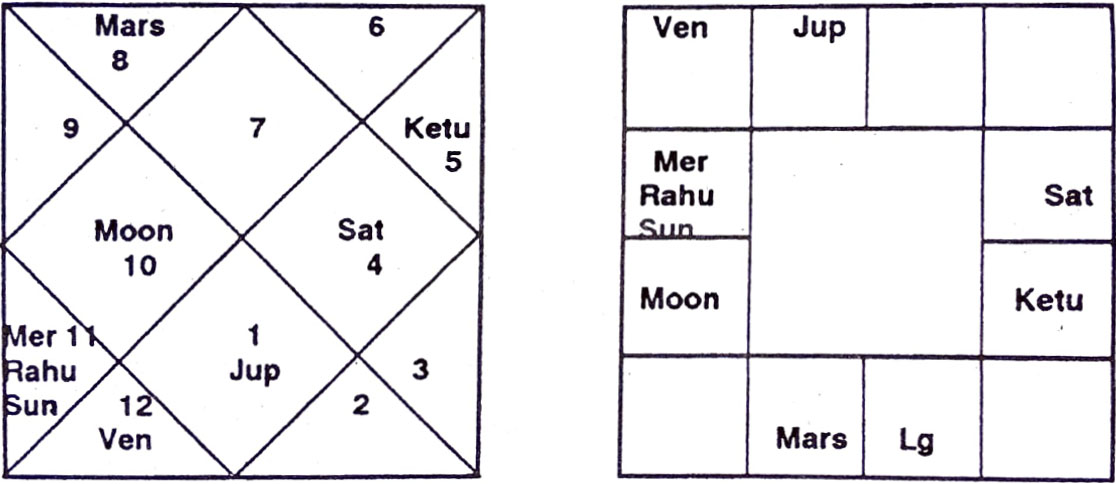
33-34. KALPADRUMA YOGA: When the Ascendant Lord and the Lord of that sign in which the Ascendant Lord is posited and then the Lord of that sign in which the Lord of that sign is placed and the Navamsha Lord of that sign, all these are in angles or trines or in their exaltation signs, the yoga formed by it is referred to as Kalpadruma yoga. The native born in this yoga will be endowed with all kinds of wealth, be a King, pious, strong, fond of war and merciful.
स्वान्त्याष्टस्यैर्द्वितीयेशाद् हरियोगः शुभग्रहैः ।
कामेशाद् बन्धुधर्माष्टस्थितैः सौम्यैर्हराभिधः ॥ ३५ ॥
लग्नेशाद् बन्धुकर्मायस्थितैर्बह्याह्वयः स्मृतः ।
एषु जात: सुखी विद्वान् धनपुत्रादिसंयुत: ॥ ३६ ॥
35-36. HARIHARA BRAHAMA YOGA: When there are benefics in the 2nd, 12th and 8th House from the 2nd Lord, the yoga so formed is called Hari Yoga; When there are benefic in the 4th, 9th and 8th House from the 7th Lord, the yoga so formed is called Hara Yoga and; when there are benefics in the 4th, 10th and 11th House from the Ascendant Lord, the yoga so obtained is Brahma Yoga. The native born in these three yogas will be happy, learned and endowed with wealth and sons.
लग्नान्मदाष्टगैः सौम्यैः पापढगयोगवर्जितैः ।
योगो लग्नाधियोगोऽस्मिन् महात्मा शास्त्रवित् सुखी ॥ ३७ ॥
- LAGNADHI YOGA: If there are benefics in the 7th and the 8th House from the Ascendant and these houses donot, have the conjunction or the aspect of the malefics, the yoga thus formed is called Lagnadhi Yoga. The native born in this yoga will be a great man, be very learned in the Sastras and be happy.
लग्नपे पारिजातस्थे सुखी, वर्गोत्तमे ह्यरुक् ।
गोपुरे धनधान्याढया, भूपः सिंहासने स्थिते ॥ ३८ ॥
विद्वान् पारावते श्रीराम देवलोके स-वाहनः ।
ऐरावतस्थिते जातो विख्यातो भूपवन्दितः ॥ ३९ ॥
38-39. EFFECTS OF ASCENDANT LORD'S DIVISION : DIGNITIES : When the Ascendant Lord has fallen in the Paarijaata Varga, the native will be happy, when he is placed in the Vargo ttama, he will be immune from diseases; when he is in Gopuramsha, he will be endowed with wealth and grains; when he is in Simhasanamsha he will be a King, when he is in Paravatamsha he will be a Scholar; when he is in Deva Lokamsha he will be opulent and; when he is in Iravatamsha he will be famous and honoured by the King.
Practice
What kind of thing is a Nābhasa yoga?
Write your answer down before opening the explanation.
Show the answer and why
Answer: A pattern in how the seven grahas are distributed across the signs — how many signs they occupy, and in what geometric arrangement.
This is what distinguishes them from every other yoga in BPHS. A Rāja Yoga is about which planets are connected and what they rule. A Nābhasa yoga does not care which planet is where — it cares about the shape. All seven in one sign, or spread across exactly three, or occupying only movable signs. That makes them the only class of yoga you can identify by glancing at a chart, which is genuinely useful and is why they exist as a category.
Source: BPHS 37
Why does the course treat Chapter 36 as Core and Chapters 37–38 as Reference, when all three are about yogas?
Write your answer down before opening the explanation.
Show the answer and why
Answer: Because Chapter 36 gives a framework that applies to every chart, and Chapters 37–38 give a catalogue of specific patterns most of which are absent from most charts.
Every chart has an ascendant, so every chart has functional natures and possibly a Yoga Kāraka: Chapter 36 is used every single time. A given Nābhasa yoga is present in perhaps a few percent of charts. A framework you use always and a catalogue you consult occasionally warrant different treatments, and the difference is not about importance — it is about frequency of use.
Chapter 38 is titled "Many Other Yogas" and is heterogeneous. What practical caution follows?
Write your answer down before opening the explanation.
Show the answer and why
Answer: Not to give its individual combinations the same weight as Chapter 36's framework or Chapter 41's Rāja Yoga doctrine.
A chapter of assorted combinations, collected rather than systematised, is a different kind of source material from a chapter that develops a principle. Some of Chapter 38's entries are genuinely useful — Gajakesari, which it names, is widely used — and some are minor. The error to avoid is promotion: treating a combination found in a miscellany as though it carried the authority of a doctrine the text spends a chapter building.
Source: BPHS 38
You notice that a chart has all seven grahas in exactly four signs. What do you do?
Write your answer down before opening the explanation.
Show the answer and why
Answer: Look up the Nābhasa yogas formed by occupation of four signs, find the name, read what Parashara says — and then check whether the planets involved can deliver it.
That sequence is the whole competence being trained. Notice the shape, find the name, read the claim, apply the delivery test. The fourth step is not optional and it is the one the catalogue itself does not supply — Chapter 37 tells you what a pattern indicates and says nothing about whether the planets forming it are in any condition to produce it.
A colleague mentions Gajakesari Yoga. Where is it in BPHS and what does that placement tell you?
Write your answer down before opening the explanation.
Show the answer and why
Answer: Chapter 38, among the assorted yogas — not in Chapter 36 or 41. It is Jupiter in a Kendra from the Moon.
Worth knowing precisely because Gajakesari is one of the most frequently cited yogas in popular practice, and its home is the miscellany chapter rather than a doctrinal one. That is not a reason to dismiss it. It is a reason to weight it as one input rather than as a headline — and to notice that Jupiter in a Kendra from the Moon is a fairly common configuration.
Source: BPHS 38
Apply it to a chart
Chart B — Albert Einstein, the synthesis chart — A whole documented life, where the evidence pulls in more than one direction. · about 16 min
| Graha | Sign | House | Degree | Nakshatra | Condition |
|---|---|---|---|---|---|
| Sun | Pisces | 10 | 1°20'30" | Purva Bhadrapada 4 | neutral |
| Moon | Scorpio | 6 | 21°47'54" | Jyeshtha 2 | debilitated |
| Mars | Capricorn | 8 | 4°44'52" | Uttara Ashadha 3 | exalted |
| Mercury | Pisces | 10 | 10°58'43" | Uttara Bhadrapada 3 | debilitated |
| Jupiter | Aquarius | 9 | 5°19'05" | Dhanishtha 4 | neutral |
| Venus | Pisces | 10 | 24°49'11" | Revati 3 | exalted |
| Saturn | Pisces | 10 | 12°01'26" | Uttara Bhadrapada 3 | neutral |
| Rahu | Capricorn | 8 | 9°18'36" | Uttara Ashadha 4 | not assigned in BPHS |
| Ketu | Cancer | 2 | 9°18'36" | Pushya 2 | not assigned in BPHS |
| Lagna | Gemini | 1 | 19°38'02" | Ardra | lord Mercury |
Nābhasa yogas are about distribution, so they are the one kind of yoga you can spot by looking at a chart rather than by calculating. Both Chart B and Chart C are worth a glance for this.
- Look at Chart B and describe the distribution of its seven grahas in plain words. How many houses are occupied? Are they contiguous? Concentrated? Spread evenly?
- Now look up whether that pattern has a name in Chapter 37. Use the family logic — how many signs are occupied, and how are they arranged — rather than reading the chapter from the start.
- Do the same for Chart C, whose distribution is quite different.
- For whichever chart shows a clear pattern, read what Parashara says about it — and then write down what else in that chart would have to be true before you would rely on the yoga's stated result.
- On your own chart: describe the distribution in one sentence, then find whether it is named.
Check your understanding
Answer from memory first. Looking back at the reading before you try turns a memory test into a copying exercise.
What is the target competence for a Reference-tier catalogue chapter?
Write your answer down before opening the explanation.
Show the answer and why
Answer: Know what it is for, know how it is organised, and be able to find any entry in it on demand.
Not recall. Applied here: you should be able to say that Chapter 37 contains thirty-two distribution-pattern yogas, that they are grouped by how many signs the grahas occupy and in what arrangement, and that you can locate any of them in under a minute. That is complete use of the chapter without memorisation.
Chapter 37's yogas involve geometric arrangements, and diagrams help with those. What should you do if a diagram is unclear or absent?
Write your answer down before opening the explanation.
Show the answer and why
Answer: Reconstruct the arrangement from the verse's own description and check it against a chart you have.
The descriptions are self-contained — they state which signs or which kind of houses must be occupied. A diagram makes the pattern quicker to see and is not load-bearing. This is worth saying because diagram loss is a real hazard in digitised classical texts, and the correct response is to work from the words rather than to assume something is missing from the doctrine.
A chart shows a named yoga whose stated result is wealth. The planets forming it are debilitated and in Duḥsthānas. What do you conclude?
Write your answer down before opening the explanation.
Show the answer and why
Answer: That the pattern is present and there is little reason to expect the stated result.
Presence is not delivery — the central discipline of this whole week. And note the correct phrasing: the yoga is not "cancelled" or "false". It is formed, and the planets forming it cannot do much. Saying that precisely is better than either announcing the yoga or dismissing it.
What you carry forward
Two things grow across the whole course. This unit adds to both.
To your chart-analysis process
- **Step 10 (continued) — identify Yogas.** Include distribution patterns from Ch. 37 where present, and note that a catalogued yoga is one input rather than a headline. Always apply the delivery test.
To your field manual
- Nābhasa yogas (Ch. 37) are distribution patterns — how many signs the seven grahas occupy and in what arrangement. They do not depend on which planet is where.
- They are the only class of yoga identifiable by glancing at a chart.
- Ch. 38 is a miscellany, not a doctrine. Weight its individual combinations below Ch. 36's framework and Ch. 41's Rāja Yoga material.
- Gajakesari — Jupiter in a Kendra from the Moon — lives in Ch. 38.
- For any catalogued yoga: notice the shape, find the name, read the claim, apply the delivery test. The catalogue supplies the first three and never the fourth.
By now you should be able to
- Say what a Nābhasa yoga is and name its families
- Recognise that a chart shows a named distribution pattern, and find its name
- Say why Chapter 38's combinations carry less authority than Chapter 36's framework
- Handle a catalogue chapter without attempting to memorise it